A burst pipe doesn’t just make a mess in one spot. It sends water on a journey through your entire home, and burst pipe water damage spreads faster than most homeowners realize. Within minutes, that water finds every crack, seam, and porous surface it can reach.
At Pride Cleaning And Restoration, Inc., we’ve responded to thousands of burst pipe emergencies across St. Louis since 1987. What we’ve learned in those 37 years? The damage you see is never the whole story.

A burst pipe can release gallons per minute, sending moisture through walls and ceilings before you notice the problem.
How Burst Pipe Water Damage Travels Through Your Home
Water follows gravity. Always. But it also follows the path of least resistance, which means it moves in directions you might not expect.
When a pipe bursts inside a wall cavity, water doesn’t just pool at the bottom. It wicks upward through drywall, sometimes climbing several feet before showing any visible signs. It seeps horizontally along floor joists. It drips into lower levels through electrical outlets and light fixtures.
Think about how a paper towel absorbs a spill. Your home’s building materials do the same thing. Drywall, insulation, wood framing, and even concrete act like giant sponges. According to the EPA’s guide on moisture and mold, these materials can hold moisture for weeks without proper drying.
Common Water Travel Patterns
- Vertical spread: Water drops through wall cavities and floor systems to lower levels
- Horizontal wicking: Moisture travels along baseboards, under flooring, and through insulation
- Capillary action: Water climbs upward through porous materials against gravity
- Seam infiltration: Water finds gaps in flooring, drywall joints, and around fixtures
Dealing with a burst pipe right now? Don’t wait for damage to spread.
Fill Out This Form for a Free Estimate
Or call us 24/7 at (314) 664-8844
The Damage Timeline: What Happens Hour by Hour
Time matters. A lot. The first 24 to 48 hours after a burst pipe determine whether you’re looking at a cleanup or a major restoration project.

Water damage inside walls often spreads far beyond the visible wet spots, requiring professional moisture detection to assess fully.
| Time Frame | What’s Happening | Damage Level |
|---|---|---|
| 0 to 1 hour | Water spreads across surfaces, begins soaking into materials | Minimal if addressed immediately |
| 1 to 24 hours | Drywall absorbs moisture, wood begins swelling, metal starts corroding | Moderate |
| 24 to 48 hours | Mold spores activate, odors develop, materials deteriorate | Significant |
| 48+ hours | Mold colonies grow, structural integrity compromised | Severe |
The IICRC S500 standard for water damage restoration emphasizes that drying should begin within 24 hours to prevent secondary damage. Every hour counts.
Hidden Damage Zones Most People Miss
You found the puddle. You mopped it up. Problem solved? Not quite.
The visible water represents maybe 20% of what’s actually happening in your home. Our technicians use thermal imaging cameras and moisture meters because the real damage hides behind walls, under floors, and above ceilings.

Kitchen and bathroom pipes are common burst locations, with water quickly spreading under cabinets and into adjacent rooms.
Wall cavities are perfect moisture traps. Insulation holds water like a sponge while drywall on both sides traps humidity inside. Without proper airflow, moisture has nowhere to go. That’s when mold growth becomes a serious concern.
⚠️ Warning Signs of Hidden Water Damage
- Musty or moldy odors with no visible source
- Paint bubbling, peeling, or discoloration
- Warped or buckling flooring
- Soft spots in drywall when pressed
- Unexplained increases in water bills
Containment Strategies That Actually Work
Speed and strategy matter equally when containing burst pipe damage. Here’s what you can do before professionals arrive.
Immediate Actions
Shut off the water supply. Immediately. Every St. Louis homeowner should know where their main water shutoff valve is located, usually in the basement near where the water line enters your home. Turn it clockwise to close. Next, turn off electricity to affected areas if water is near outlets or light fixtures.
Short Term Containment
Remove standing water with towels, mops, or a wet/dry vacuum. Move furniture and valuables away from wet areas. Open windows and doors to increase air circulation if weather permits.
Don’t pull up carpet or tear out drywall yet. Professional assessment should happen first to document damage for insurance purposes. Learn more about the proper steps for water damage repair before taking destructive action.
Professional Restoration
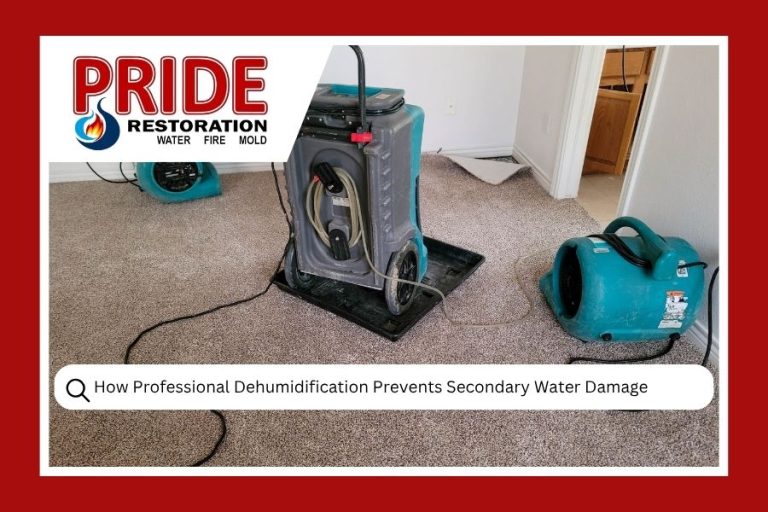
Our team uses commercial extraction equipment, industrial dehumidifiers, and air movers strategically placed for optimal drying. Proper containment takes three to five days depending on severity.
When disaster strikes your St. Louis home, Pride Cleaning And Restoration, Inc. responds 24/7 with the equipment and expertise to stop water damage fast. Our veteran-owned company has protected local families since 1987.
Frequently Asked Questions
How far can water travel from a single burst pipe?
Water can travel 20 feet or more horizontally and affect multiple floors vertically. Through capillary action, water wicks through drywall and insulation far beyond the visible wet area.
Can I dry out burst pipe damage myself with fans?
Household fans help with surface moisture but cannot adequately dry water inside walls, flooring, or insulation. Professional restoration requires commercial dehumidifiers and moisture detection equipment for complete drying.
How quickly does mold start growing after a burst pipe?
Mold spores can begin germinating within 24 to 48 hours in warm, moist conditions. This is why professional water damage restoration emphasizes rapid response and thorough drying.
Will my homeowner’s insurance cover burst pipe water damage?
Most homeowner’s insurance policies cover sudden pipe bursts. Document all damage with photos before cleanup begins, and contact your insurer promptly. Our team works directly with insurance adjusters to help streamline claims.