Water damage in finished basements sneaks up on St. Louis homeowners every spring. You spent good money turning that lower level into a family room or home office, and then one rainy week you notice a damp smell or a soft spot in the carpet. If unexpected moisture shows up below grade, professional water damage restoration can stop the problem before it turns into something much bigger.
At Pride Cleaning And Restoration, Inc., we’ve spent over 37 years helping families across St. Louis recover from exactly this kind of situation. Finished basements create unique challenges because the damage hides behind drywall, under carpet padding, and inside wall cavities where you can’t see it.

Once water reaches this level, the damage to flooring, drywall, and stored belongings adds up fast.
Why Finished Basements Are So Vulnerable to Water Damage
Basements sit below the soil line, and that single fact changes everything. Hydrostatic pressure from groundwater pushes moisture through foundation walls, even through hairline cracks that were invisible when the space was first finished.
The real trouble? Finished walls trap that moisture. Framing, insulation, and drywall create a hidden cavity where water pools, wicks upward, and feeds mold for weeks before anyone notices. Older homes in neighborhoods like Kirkwood, Webster Groves, and Brentwood are especially prone because foundation waterproofing degrades over time.
Early Warning Signs of Water Damage in a Finished Basement
Catching water damage early is the difference between a minor repair and a complete gut job. Here’s what to watch for during Missouri’s rainy spring months.
Basement Water Damage Warning Signs
- Musty or earthy odors that linger even after cleaning
- Carpet that feels damp or cool in certain spots
- Baseboards pulling away from the wall or warping
- Bubbling or peeling paint along the lower portions of walls
- White, chalky residue (efflorescence) on exposed concrete
- A dehumidifier running constantly without lowering humidity
If you’re noticing two or more of these signs, moisture is almost certainly behind your walls. The EPA recommends addressing moisture problems within 24 to 48 hours to prevent mold growth.
Think Your Finished Basement Has Water Damage?
Our team offers free estimates and 24/7 emergency response across the St. Louis metro area.
Fill Out This Form for a Free Estimate
Or call us 24/7 at (314) 664-8844
Below-Grade Challenges That Make Water Damage in Finished Basements Worse
Below-grade spaces face problems the rest of your home doesn’t deal with. Understanding these challenges explains why basement water damage needs a different restoration approach.

Window wells and low-grade windows like these are common water entry points that finished basements often hide behind trim.
| Challenge | Why It Matters |
|---|---|
| Hydrostatic pressure | Groundwater constantly pushes against foundation walls |
| Poor ventilation | Trapped air holds humidity, slowing natural drying |
| Foundation cracks | Even hairline cracks allow water intrusion over time |
| Sump pump failure | Power outages during storms disable your first line of defense |
These factors mean even a small amount of water causes outsized damage in finished spaces. The moisture gets trapped, the air stays stagnant, and mold finds its ideal growing environment. If you’ve spotted mold alongside water damage, mold remediation should be part of the plan from day one.
How to Address Water Damage in Your Finished Basement
How you respond in the first few hours makes all the difference. Here’s a practical breakdown.
- Identify the source. Is it a plumbing leak, foundation seepage, or condensation? Check for burst pipe damage first, since pressurized leaks escalate fast.
- Stop the water if possible. Shut off the main valve for plumbing issues. Move furniture away from wet areas.
- Remove standing water. Use a wet vacuum for small amounts. Anything more than a few inches likely needs professional extraction.
- Increase airflow. Open windows if weather permits. Run fans and dehumidifiers to keep air moving.
- Document everything. Take photos and videos before cleaning. Our post on why speed matters in the first 48 hours covers the documentation process in detail.
- Call a restoration professional. If water has reached behind walls or sat for more than a day, DIY drying won’t cut it.
According to FEMA’s flood preparedness resources, professional assessment is recommended any time floodwater contacts finished building materials.

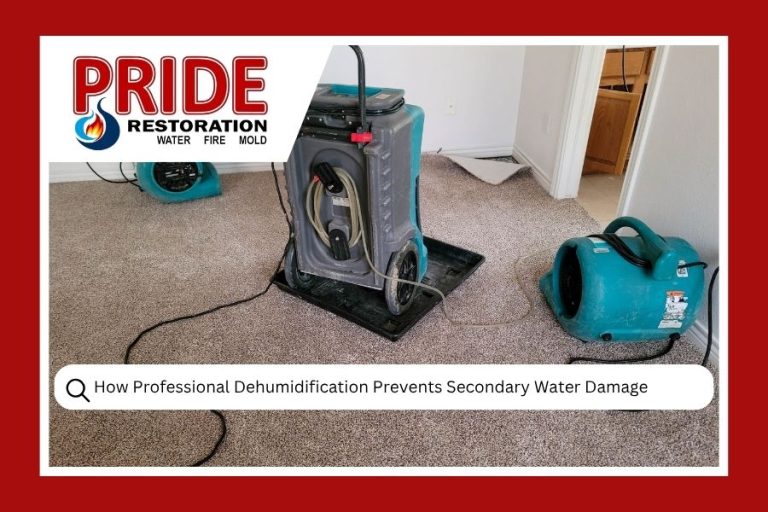
This is what the drying process looks like. Air movers and dehumidifiers run for days to pull moisture out of carpet and padding.
Our team uses thermal imaging and moisture mapping to find every affected area. We’ve been doing this across Soulard, Tower Grove, and University City since 1987. To learn more about how mold develops after water exposure, check out our post on identifying dangerous mold types in your home.
Whether your basement took on water after a storm or you’ve been fighting slow moisture for months, Pride Cleaning And Restoration, Inc. is here to help. We offer free estimates, work with your insurance, and our veteran-owned team responds 24/7.
Frequently Asked Questions
How can I tell if water damage behind my finished basement walls is getting worse?
Look for paint bubbling higher up the wall, baseboards pulling away, increasing musty odors, or allergy symptoms that worsen when you spend time downstairs. A professional moisture inspection can confirm whether hidden damage is spreading.
Does homeowner’s insurance cover water damage in finished basements?
It depends on the cause. Sudden events like burst pipes are typically covered. Gradual seepage and groundwater intrusion usually require separate flood or sewer backup endorsements. Document the damage immediately with photos and video.
Can I just run a dehumidifier instead of calling a restoration company?
A household dehumidifier helps with humidity but can’t dry water trapped behind finished walls or inside insulation. Professional restoration uses commercial-grade equipment and moisture mapping to make sure every affected area is dried properly.
How long does it take mold to grow in a wet finished basement?
Mold can begin growing within 24 to 48 hours of water exposure. Finished basements with trapped moisture, poor ventilation, and organic materials like drywall and carpet padding create ideal conditions for rapid mold growth.